
Wellness
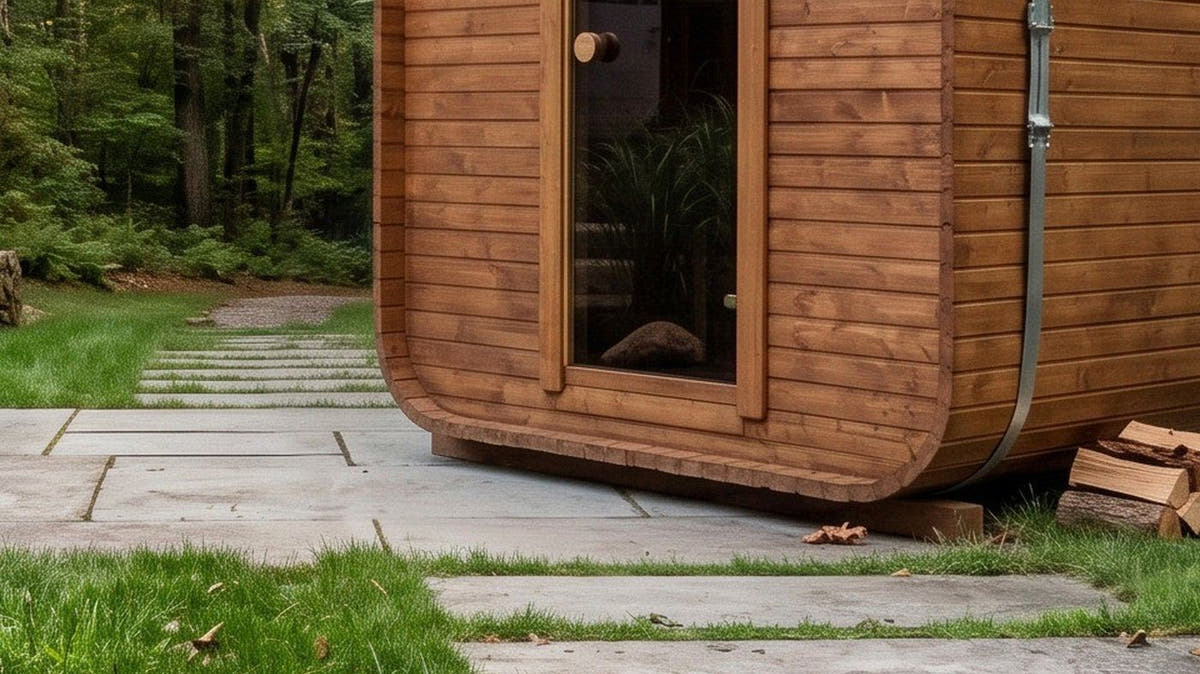
Home sauna UK: choose the space before the model
Where would a home sauna fit into your ordinary week? An indoor room keeps the shower close, while a garden sauna needs a route you are happy to walk after dark. Both take preparation beyond choosing a heater. Begin with the space you can use, the people who will share it and the work needed before the first session. Then compare models against that plan.

Sauna accessories UK: what to choose before your first session
A pail and ladle can be packed together, yet the stones still need their own line on the order. Sauna accessories cover very different jobs, from loading the heater to hanging a towel outside. Start with the items your chosen heater needs, then decide which extras you will use. Choose built-in options with the cabin. Portable extras can wait until you know the room.

Sauna lighting: which lights take the heat, and where they go
Light in a sauna has three jobs. It should show you the step and the edge of the bench, let you read the thermometer and get you back to the house after dark, all without a bright lamp in your eyes. Harvia keeps the lamps low in its own saunas, hidden from view. Plan where the lights go with your electrician and check what comes with the lighting you choose, including whether each fitting can cope with the heat.
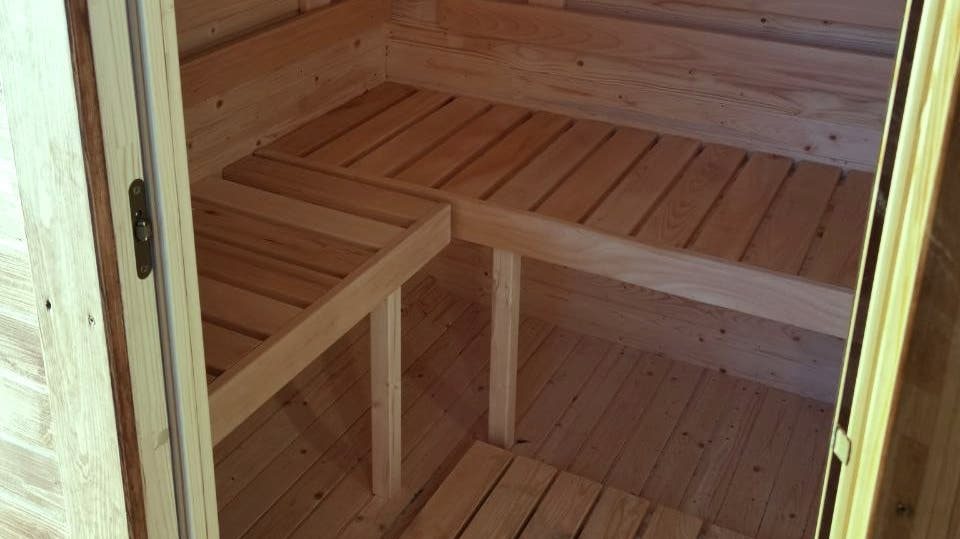
Sauna temperature: how hot a sauna gets, and what the thermometer tells you
A traditional sauna usually runs somewhere between 70 and 90 °C, and Harvia’s heater manual suggests about 65 to 75 °C for the room. There is no single correct figure, though. The same room reads differently at the ceiling, on the bench and by the door, and a ladle of water on the stones changes how that heat feels within seconds. Your thermometer’s position matters when you judge the heat, whether you set it with an electric heater or tend a wood stove.
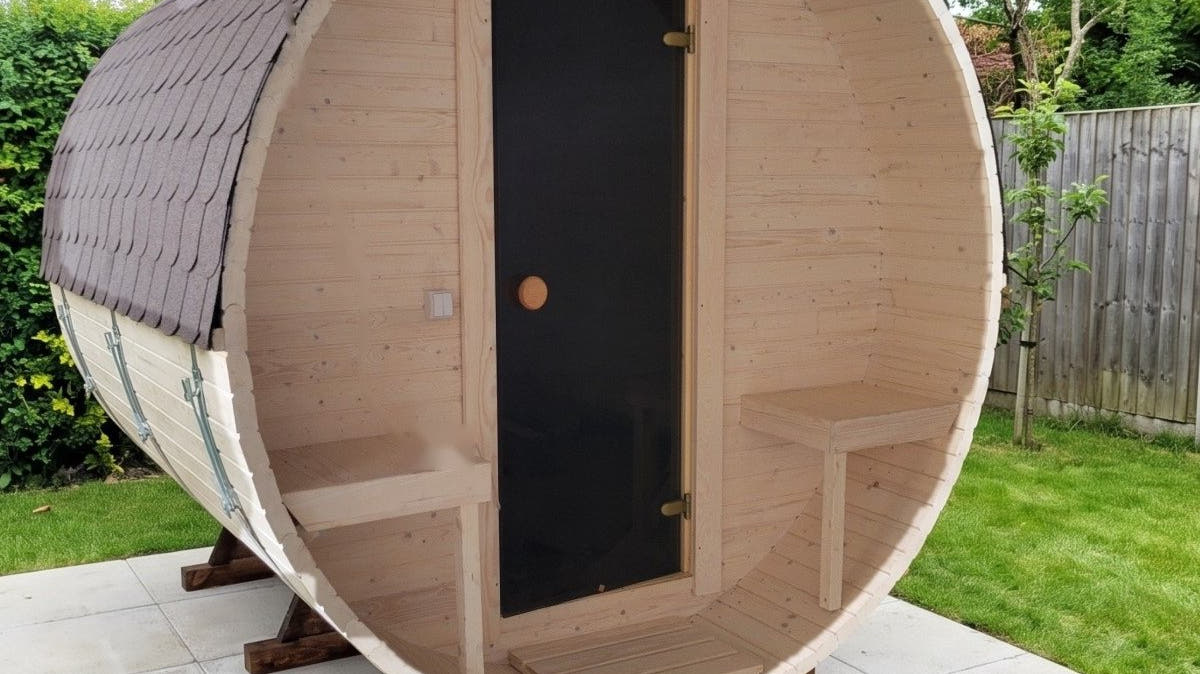
Barrel sauna kits: what is in the crate, how a barrel goes together and who does what
Barrel sauna kits sold in the UK arrive as a flat pack: numbered wall boards, end-wall panels, shaped cradles, steel straps, shingles and well over a thousand fixings in one timber crate. Building one is carpentry for two people with ordinary tools, in a fixed order the factory draws step by step. Before you order, it helps to know what is in the crate, what you buy yourself, and which jobs belong to an electrician or a stove installer.
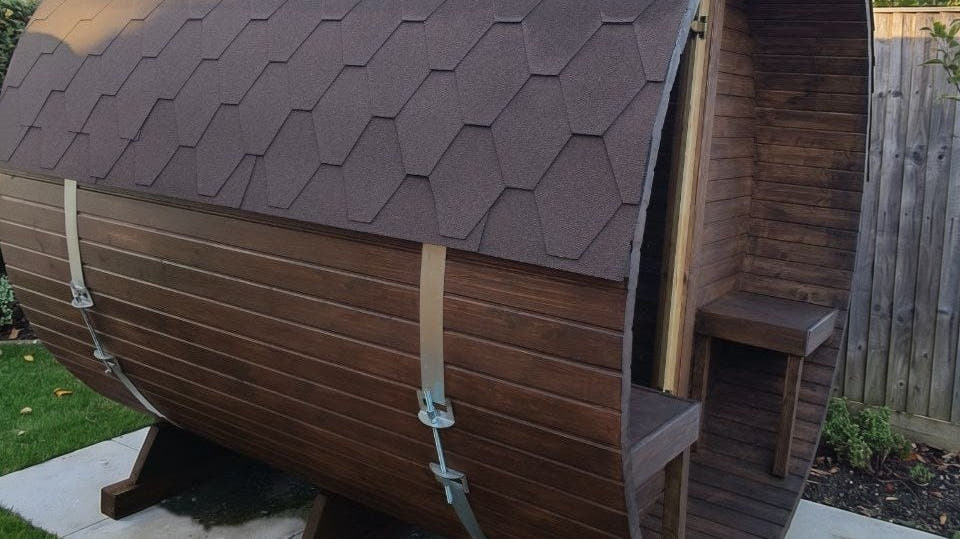
Barrel sauna maintenance: straps, roof, treatment and drying, season by season
Barrel sauna maintenance comes down to one property of solid spruce: it swells when the air is damp and shrinks when it is dry. The steel straps that hold the staves together have to follow that movement, the shingle roof has to keep rain on the outside, and the timber has to dry out after every session. Apart from sweeping the flue of a wood stove, none of it needs a trade, only the right job at the right time of year.
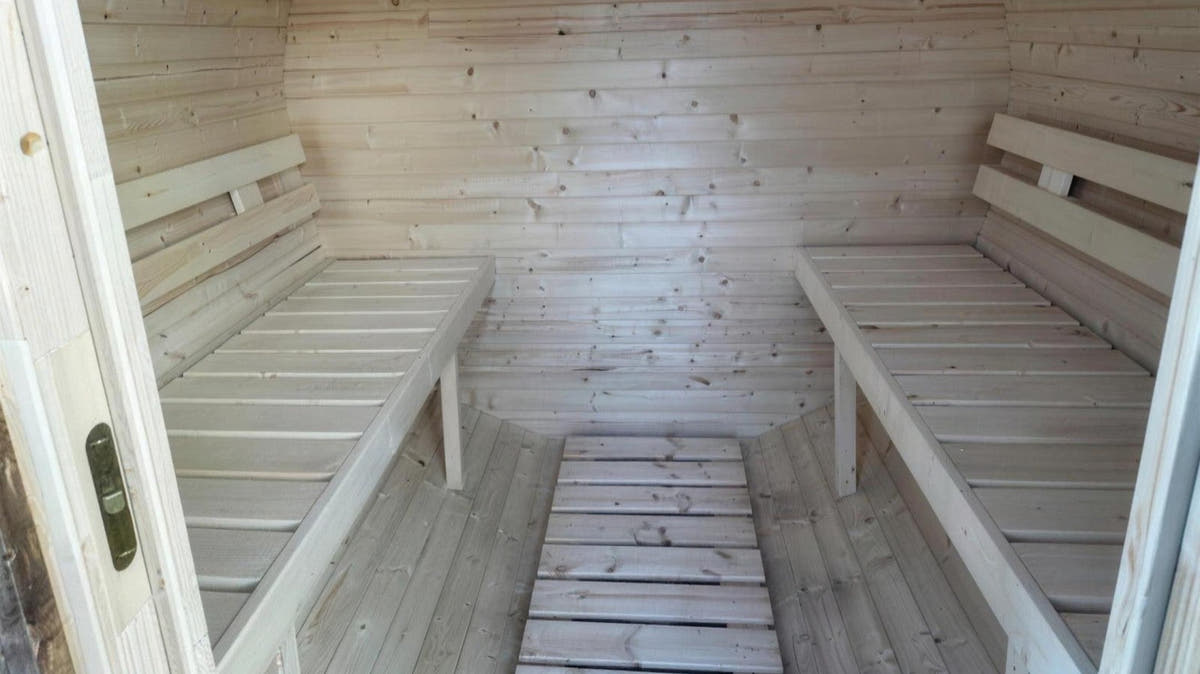
How many people fit in a barrel sauna? Seats, benches and the 2, 4 and 6 person labels
How many people fit in a barrel sauna depends on one measurement more than any other: the length of each bench. Every barrel in our range has two benches facing each other along the curved walls, at one height, with the heater on the back wall between them. The label counts people sitting up, and the honest check is to divide each bench by the width one person needs, then check the space for knees and feet. Think about where everyone will change too.
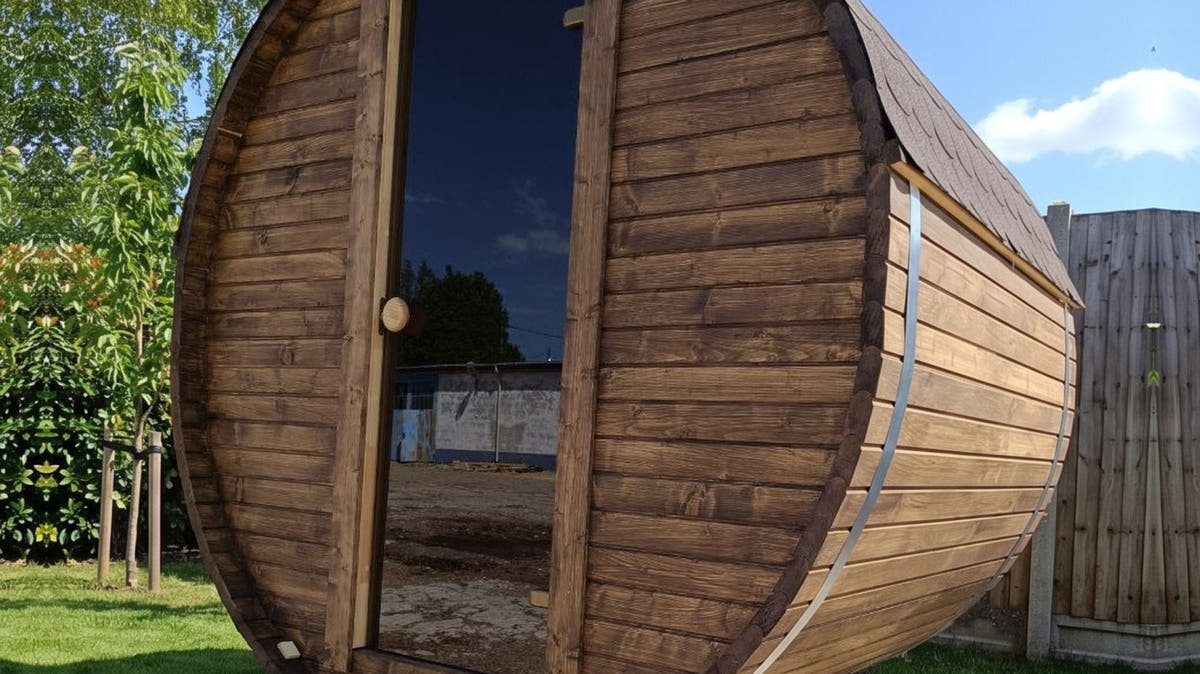
Barrel sauna sizes: dimensions, footprint and how much garden you need
Barrel sauna sizes are given as a length, because the width is fixed by the barrel itself. Ours are all 220 cm across and come in three lengths: 185, 240 and 340 cm. Start with the figure on the product page, then measure the space around it. A barrel also needs a level pad exactly its size, a path to its door, room to walk round it and reach its straps, a way in for the parts, and, if it burns wood, somewhere to stand at the back.
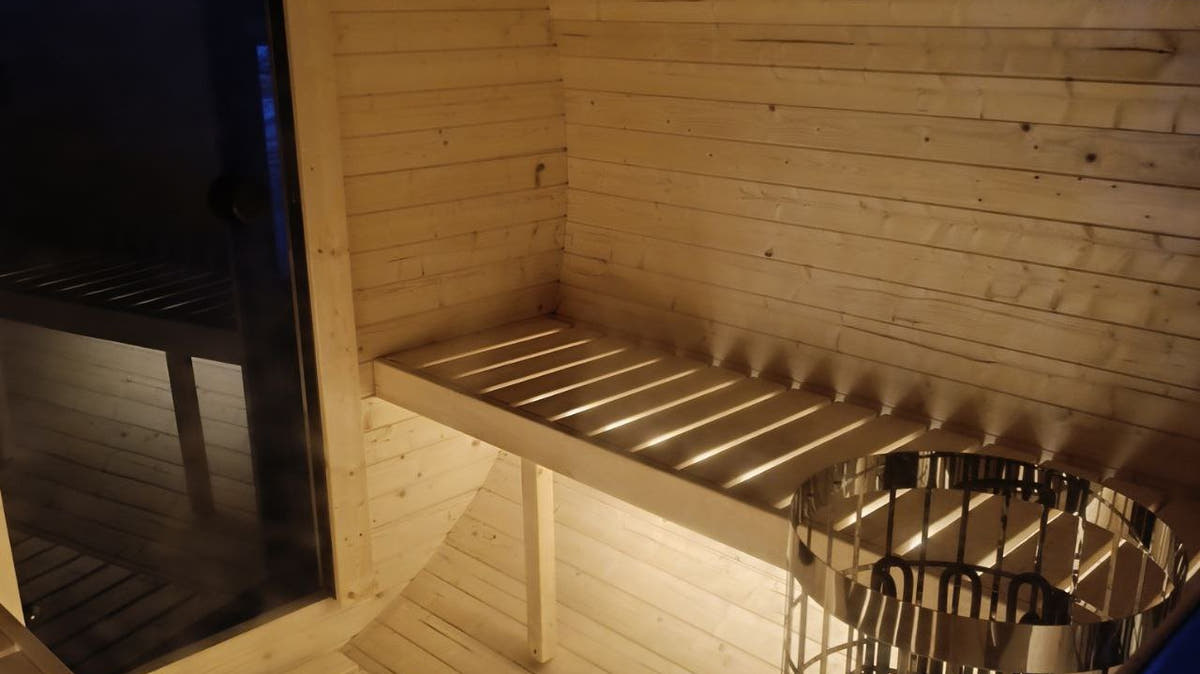
Barrel sauna heater: electric or wood-fired, and what suits a solid-timber barrel
Every barrel sauna heater in our range sits in the same place: on the back wall, between the two benches. What changes is where its heat comes from and what it asks of your garden. An electric heater needs its own circuit from the consumer unit and a qualified electrician. A wood stove needs no power at all, but it needs a flue, dry logs, an address outside a smoke control area and somewhere to stand behind the barrel while you feed it.
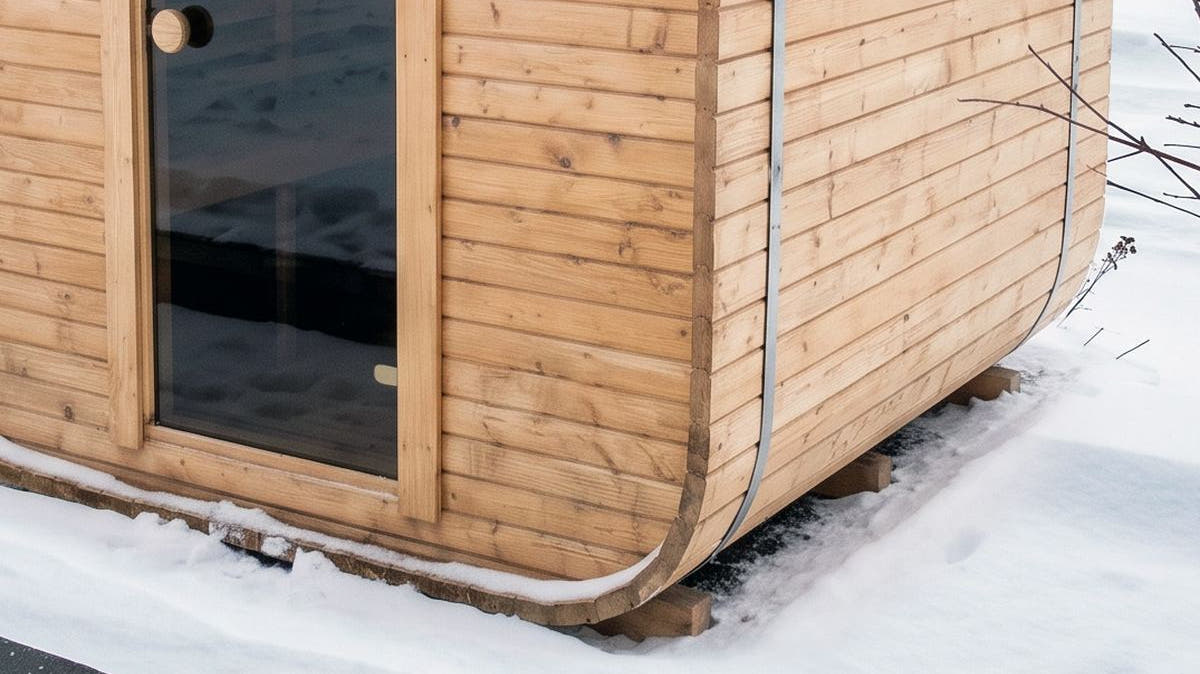
Sauna wood: which timber goes on the walls, the benches and the outside
A sauna is a timber room exposed to repeated cycles of high heat, moisture and drying, week after week. The wood does three different jobs: the walls hold the heat, the benches touch your skin, and the outside faces the weather. Match sauna wood to its job. Learn which knots and cracks are normal in solid wood, and how its colour changes.
Finnish sauna: what makes it Finnish, and how to get one in a UK garden
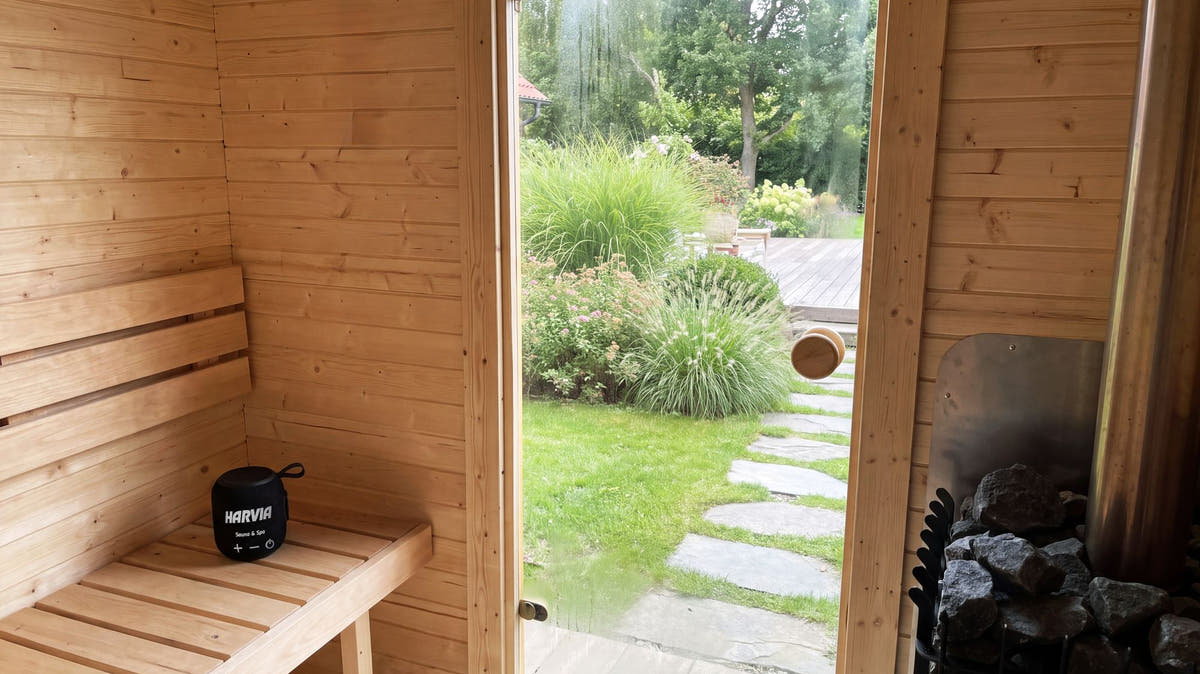
A Finnish sauna has a stove with heated stones, benches and water for löyly, the steam made when water meets those stones. The tradition includes how people share the room as well as how they heat it. For a UK garden, start with the heater and layout, then work through the practical details: how it arrives, who builds it and where you go between rounds.
Indoor sauna at home: what a basement, garage, bathroom or spare room needs
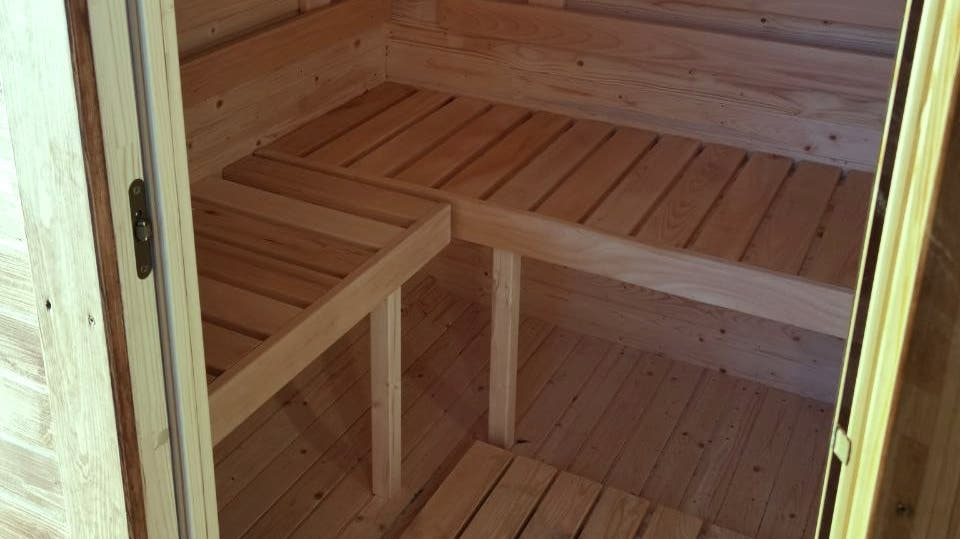
An indoor sauna turns a room in the house into one that usually runs at 70 to 90 °C and produces a burst of steam each time water is poured onto the stones. Most rooms are not built for that. Before you choose between a basement, a garage, a bathroom or a spare room, check five things: the height, the walls, the air, the electrics and the floor.
